
What is Blood Flow Restriction Training?
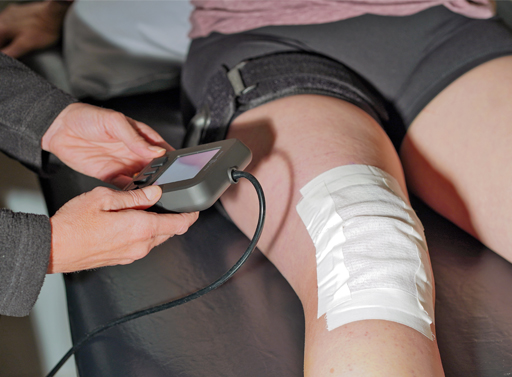 Blood Flow Restriction (BFR) Training is a rehabilitation and strengthening technique that allows patients to build muscle strength and improve function while using significantly lighter weights than traditional strength training.
During BFR training, a specialized cuff is placed around the upper arm or upper leg and inflated to a personalized pressure. This partially restricts blood flow from leaving the limb while still allowing blood to enter the muscles. The result is that your muscles work harder and receive many of the same benefits as heavy resistance training, even when performing low-load exercises.
BFR has since been extensively researched and adopted by physical therapists and medical professionals worldwide.
What Can Patients Expect During BFR Training?
During your session, your physical therapist will place a specialized cuff around your arm or leg and determine a safe, individualized pressure based on your circulation and medical history.
You will then perform exercises using light weights, resistance bands, or body weight movements. While exercising, you may experience:
-
A feeling of muscle fatigue sooner than expected
-
Mild pressure from the cuff
-
A muscle “burn” similar to intense exercise
-
Temporary muscle swelling or fullness
Most BFR exercises are completed in short sets with rest periods between exercises. Once the session is complete, the cuff is removed and normal blood flow immediately returns.
Although the exercises are performed with lighter resistance, many patients report that their muscles feel as though they completed a much more challenging workout.
Benefits of Blood Flow Restriction Training
Increased Strength with Less Stress on Joints
Because BFR uses light resistance, patients can improve strength without placing excessive stress on healing tissues, painful joints, or surgical repairs.
Reduced Muscle Loss
After surgery or injury, muscle weakness and atrophy can develop quickly. BFR helps maintain and rebuild muscle mass during the recovery process.
Faster Functional Recovery
Research suggests that BFR can help patients regain strength and function more efficiently when incorporated into a comprehensive rehabilitation program.
Improved Muscle Growth
The metabolic changes created during BFR stimulate muscle-building processes similar to those achieved during traditional heavy resistance training.
Enhanced Circulation and Endurance
BFR may improve vascular health, muscular endurance, and overall exercise tolerance in appropriate patients.
Who Can Benefit from BFR Training?
BFR may be beneficial for patients recovering from:
-
ACL reconstruction
-
Meniscus surgery
-
Rotator cuff repair
-
Total knee replacement
-
Tendon injuries
-
Fractures
-
Chronic pain conditions
-
General muscle weakness or deconditioning
Is BFR Training Safe?
When performed by a trained healthcare professional using specialized equipment, BFR training has been shown to be safe for appropriate patients.
Before beginning BFR, your therapist will review your medical history and determine whether you are a suitable candidate. Certain medical conditions may require modifications or may make BFR inappropriate.
Your safety is our top priority, and all BFR sessions are closely monitored by licensed physical therapy professionals.
Frequently Asked Questions
Does BFR hurt?
Most patients describe BFR as feeling tight and challenging, similar to the sensation of exercising intensely. While muscle fatigue can occur quickly, the discomfort is temporary and well tolerated by most individuals.
How long does a BFR session take?
Most BFR exercises take between 10 and 20 minutes and are integrated into your regular physical therapy treatment plan.
How soon will I see results?
Many patients notice improvements in strength and muscle activation within several weeks, although results vary based on the injury, diagnosis, and overall rehabilitation goals.
Interested in Learning More?
If you think Blood Flow Restriction Training may benefit your recovery, call to make an appointment for an evaluation. Your physical therapist will determine whether BFR is appropriate for your condition and develop a personalized treatment plan to help you return to the activities you enjoy.
Call us at 781-326-8332

Careers & Employment
Member Login
Guest Registration
Dedham Health Home
Injuries
Contact Us
Patient Information
Why Us
Dedham Health Physical Therapy
200 Providence Highway
Dedham, Massachusetts 02026
Phone: (781) 326-8332
Fax: (781) 326-8262
Email Us
Aquatic Therapy
Testimonials
About Us
Back Pain