

Staying Safe and Injury-Free During Warm Weather Activities
June 24, 2025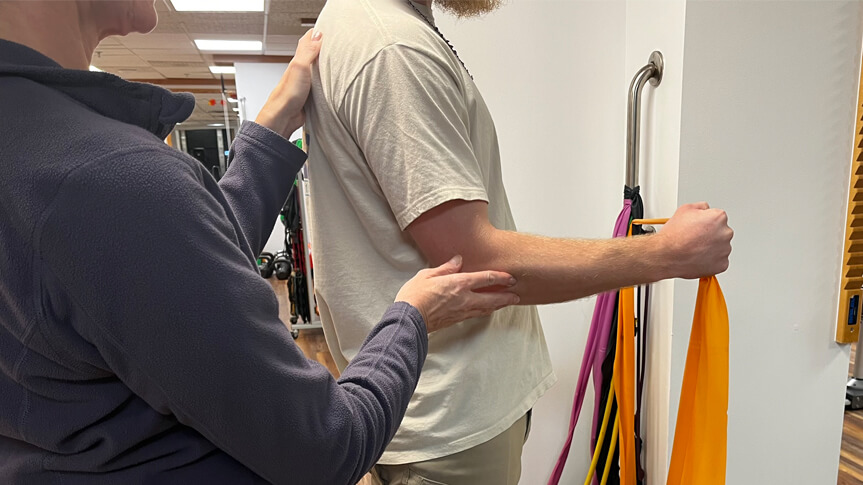
Understanding Shoulder Pain:
How Physical Therapy Restores Mobility and Strength
Shoulder pain is one of the most common musculoskeletal complaints, accounting for an estimated 16% of all primary care visits related to muscle and joint issues. Because the shoulder is involved in nearly every upper-body movement—from lifting objects to reaching overhead—even mild discomfort can significantly impact your daily productivity and quality of life.
While it can be tempting to rest the joint and hope the discomfort subsides, prolonged inactivity often leads to increased stiffness. Fortunately, physical therapy (PT) offers a clinically proven, non-invasive pathway to relieve pain and restore full function.
Here is an overview of why shoulder pain occurs and how structured physical therapy addresses the root cause of the dysfunction.
The Anatomy of the Shoulder Joint
-
Shoulder Impingement: This occurs when the tendons of the rotator cuff are pinched during shoulder movements, leading to localized inflammation.
- Rotator Cuff Tendonitis or Tears: Repetitive strain or acute injuries can cause micro-tears and inflammation in the tendons, reducing overall arm strength.
- Adhesive Capsulitis (Frozen Shoulder): A condition characterized by stiffness and pain where the connective tissue surrounding the joint becomes thick, tight, and inflamed.
- Pain and Inflammation Control: In the acute phase, therapists utilize manual therapy techniques, gentle joint mobilization, and modalities like heat or cold therapy to reduce swelling and alleviate pain.
- Restoring Range of Motion: Targeted stretching protocols assist in elongating tight anterior structures (like the chest muscles) and posterior joint capsules, eliminating mechanical pinching.
-
Stability and Strengthening: Patients perform progressive resistance exercises to strengthen the rotator cuff and stabilizing muscles of the scapula, ensuring long-term joint stability and preventing future reinjury.
If shoulder pain is limiting your range of motion or disrupting your sleep, call Dedham Health Physical Therapy and one of our knowledgeable physical therapists will complete an evaluation and establish a personalized recovery plan.
Careers & Employment
Member Login
Guest Registration
Dedham Health Home
Injuries
Contact Us
Patient Information
Why Us
Dedham Health Physical Therapy
200 Providence Highway
Dedham, Massachusetts 02026
Phone: (781) 326-8332
Fax: (781) 326-8262
Email Us
Aquatic Therapy
Testimonials
About Us
Back Pain